The Clerical Nature of Light: Light Bending

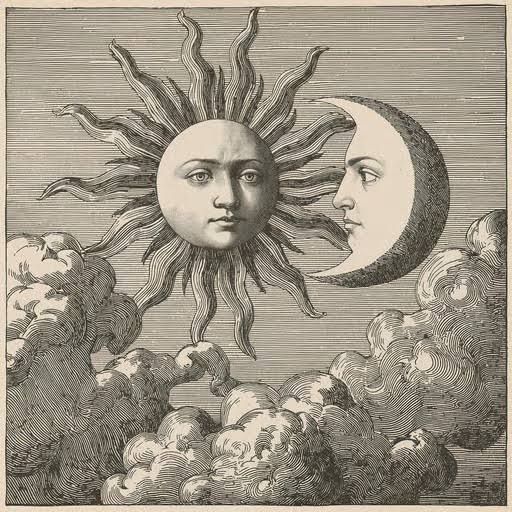
“Sometimes life is like this dark tunnel. You can’t always see the light at the end of the tunnel, but if you just keep moving… you will come to a better place.”
— Uncle Iroh
Often I reflect on what to do next as a freelancer, there is no clear path written for me by a committed western corporate structure. Luckily "the office" is only a metaphorical room inside of my own mind. The hunger for money often leads me down the trail towards gigs, following my nose for the next prey of commercial opportunity to turn my obscure set of skills into a meal on my plate. After my tenure here as a filmmaker, turned small business lighting gear owner/operator; I've learned that my belly can be full usually for a winter hibernation. The problem with my hibernative state as a gaffer, is I have too many damn lights shining that present many different tunnels. One thing is clear now to me, after creating artistic escapism through films, and corporate escapism through marketing projects that are write offs for businesses, each year I yearn for finding out how to go down the tunnel that shines bright on an area that resonates in a "meaningful" way for me, something with "purpose".
Luckily, I do appreciate the craft of shaping light onto people and products. Providing a service that is both aesthetically valuable and logistically minded for smooth sailing film sets is very much in its own way rewarding. Finding the new method for creating an easily controllable, fast to deploy, and quickly tweakable soft light can require plenty of both theoretical and applied knowledge. Lighting on film shoots is both cerebrally and physically demanding, providing a very somatic experience for the Gaffer and the Client. So how do I bring this niche knowledge outside of these sets? How do I practice my craft without buying the new toy or tool? How do I feel the magic that is seeing the sunlight reflect off of the lake onto the tree's or the dapple through leaves on a breezy day?
In practice there are many answers to this: Build a lamp, design a light show, make a candle or better yet build a candle holder that burns 2 hours a night and projects a shadow of the current phase of the moon on the wall. But no, I need to think before doing these things for somereason, year after year. The wick on my thought clock is getting short now, it feels like maybe it was no wick at all but maybe a fuse in a comically designed stick of tnt made to look like a candle. Ready to explode with "purpose" at any time. There are a lot of great arteries related to lighting that seem like very inspiring routes of research; power distribution in electrical systems, photon's dualistic nature as both waves and particles, refraction, diffusion, bioluminescence, circadian rhythms, Infrared light therapy, x-ray, etc. It's a bit of an alchemical desire, to find a new meaning with my practice of light bending.
For this dilemma, I've started a search of many thoughts, desires and itches and turning them into more meta concepts. How can one have "skin in the game" of contributing to the greater concept of life through the medium of light. "Skin in the game" a book by Nassim Nicholas Taleb illustrates how theorists and academics often have less experiential involvement in meta concepts, so I reference it as a guiding star to not get lost in the sauce of academic pontification. So why is light so intrinsically linked to life on this planet? Without it we would literally not exist. Alas, a bit of a dramatic statement for this is true amongst many things we would literally not exist with their absences. Light photons however are inherently dramatic buggers. If you remember the fun middle school science class where you learn about the "Dual Slit Experiment" you may be privy to what I before mentioned as the photons intrinsically dualistic nature. For: The dual-slit experiment demonstrates that light behaves both like a wave and a particle, with individual photons producing an interference pattern when unobserved but behaving like distinct particles when measured. Or better yet "Hey Mom, watch what I can do!" and then your new trick learned momentarily ago on your skateboard takes a totally new form, typically resulting in a bruised knee or scuffed elbow. The measurement and observation of pattern, will almost always affect the pattern. (If you're a quantum physicist specializing in quantum foundations / quantum measurement theory and want to criticise please do, however the point remains). So when I look at this pattern I've developed toward each winter, the photons of my idea's shape shift.
When trying to form the shape of these shifting thoughts and patterns inside of my life, I have thought recently of joining artist residencies, or research groups to be around people who could give me a direction of who to talk to or what books to read. However, before I walk down the road of "doing the thing", I want to clarify my world view on what it is I believe or what type of ideas I have strong convictions around. I was lucky enough to have to walked down a road of doing the thing with filmmaking, and that was out of a sheer want. "I want to learn new things and I want to make films". However, for me, sheer want leads you to a confusing path or unlimited perspectives and confusing voices giving you recommendations or turning down areas of interest. So how does one dim the lights and focus into the proper channel? Well maybe I shouldn't dim any of the lights, yet narrow my aputure. So, what is my personal manifesto of light and its importance?
Light is clerical. In many holy texts and religious traditions, light represents God, mystical entities, clarity and divinity. However "clerical" has also been a corporate term to describe duties of routine, record keeping, data entry or accounting. Which ever your master may be, it does seem reasonable to identify light as sort of cosmic record keeper. Anecdotally, the stories of our civilization have been past down from the ancient cosmos and shared around a warmth of the fire amongst community. Now, the metaphor becomes strangely literal. The stories we tell are no longer carried only by burnt out stars, firelight, or the spoken word, but increasingly by light itself. The internet, which has become something of a collective memory for our civilization, moves enormous quantities of information as pulses of light through fiber-optic cables. Data centers use optical networks to shuttle information between machines, while increasingly sophisticated technologies use photons to read, write, transmit, and process information. Even when the information ultimately resides as electrical charges or magnetic states inside a computer, light has become one of the principal messengers by which that information travels. Regrettably to my own leanings towards laziness and desire for simple answers, light is neither form nor function, It is both. As a gaffer I've found the two worlds of interaction with light, science and art, often communicate with each other in odd ways.
When the lights dim down, and the show starts, our attention shifts from our surroundings and onto the stage. Here, in the theatre of your choosing, light is performing a function. Behind the scenes a controller of these lights is manipulating the lights form, lowering the output of lumens and and shifting your attention to the ceremony about to commence. This is not a situation where you need science to explain to you how it would feel to be in this space. The art that light provides in directing a viewers attention is completely somatic and common sense. A more interesting observation in light control of our human surroundings that I've stumbled upon recently, and would like to provide you the reader with, is much less common sense and not as intrinsically somatic.
How do we keep our friends from dying less while driving home from work? Red Light. Now, as much as I would like to claim that a red light mask to beautify the skin of your money maker is what I mean by this, it is not. To my bewilderment Red Light or slightly more specific - long-wavelength light (∼600–640 nm) has been proven to significantly increase subjective alertness, cognitive function, and neurological brain activity into the night time without having as much of a detrimental effect onto our circadian rhythm as Blue Light (or short wavelength light) does. So the science behind red light being going for the safety of night shift workers does not feel very common sense to me. For in main stream media's depiction of red light we often associate it with un-ease and fear. A horror film only uses the red break lights to illuminate the silhouette of a vampire ready to feast on two teens necking in a parked car at a scenic overlook, while the teens are lit by a cities cool glow in the distance, or a calming and cinematically perverted shade of blue light coming from the white moon. So again, another case of photons acting differently then what we might expect. Bridging the gap of this scientific knowledge and common place experiences or artistic experiences with light is a new goal of mine with Light Bending. For an artist, this feels like a daunting task, but within science and art we can find the clerical guidance of light.
As of writing this Sepetmber 27th, 2026 I don't claim to be going down a scientific pilgrimage of divine physics knowledge. I don't fantasize about a PHD or MFA. However, I do want to appreciate our modern time's privilege to lean into quests of a new era for renaissance. A time where we can avoid being specialists even after 10 years of hype niche skill building in a career with the utmost uncertainty. A time where we can take risk, even while in the claws of some corporate structure, as by now many of us can feel the lack of certainty provided to us by these companies. I feel like many of us can be observed as one thing, while actually also being something completely unique from that one observation at the same time.
